
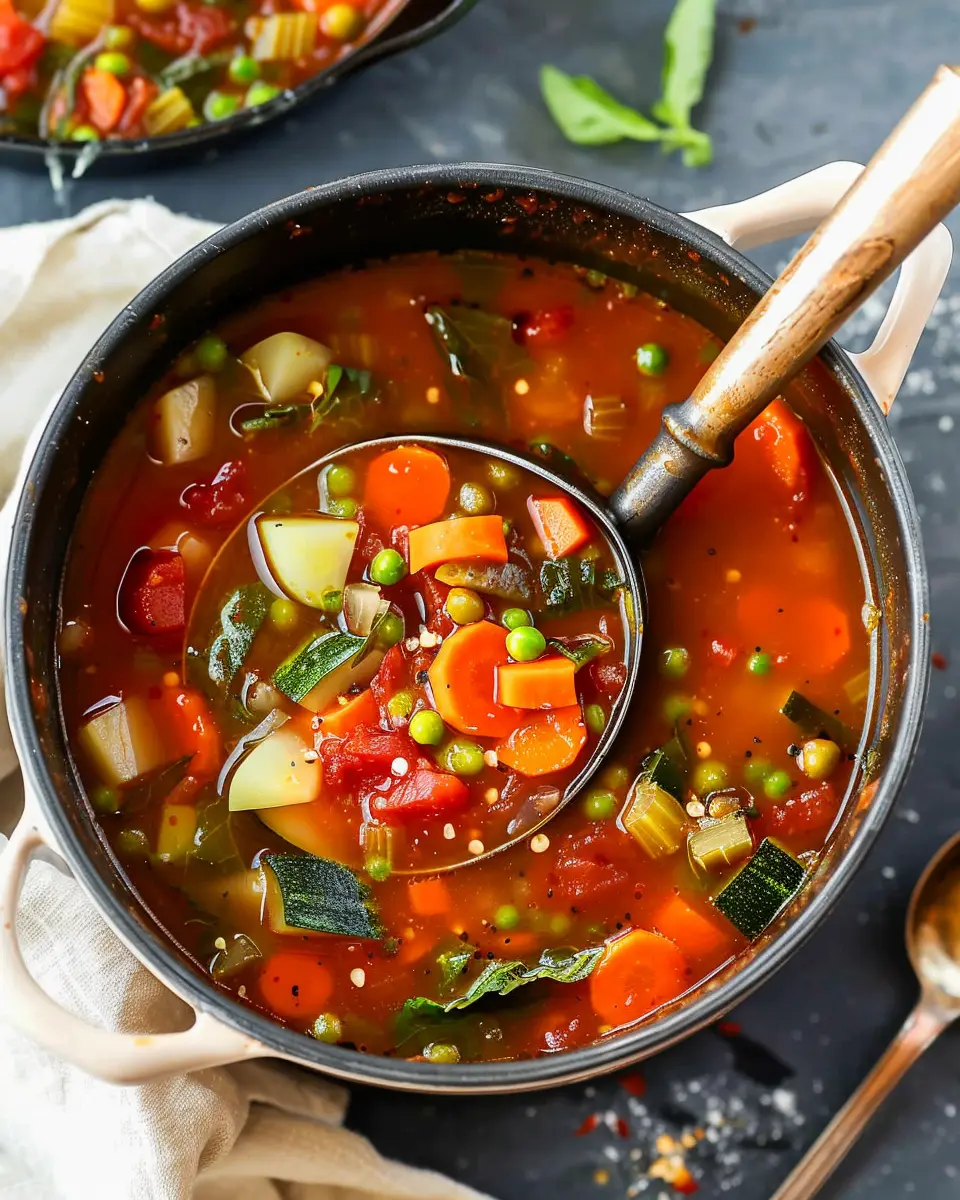
Introduction to Vegetable Soup
Vegetable soup is more than just a simple dish; it’s a delightful embrace of flavors and a treasure trove of nutrition. For those of us juggling busy lives, a hot bowl of this hearty concoction offers both comfort and convenience. Just picture coming home to a warming pot of aromatic broth filled with vibrant veggies after a long day. It’s this quintessential appeal that makes vegetable soup a favorite, especially among young professionals looking to balance taste, health, and time efficiency.
One of the remarkable aspects of vegetable soup lies in its versatility. Whether you’re a seasoned cook or a beginner in the kitchen, you can easily customize it according to the ingredients you have on hand or your dietary preferences. Want to go plant-based? Skip the turkey bacon and add more legumes. Craving something heartier? Toss in some chicken ham or a handful of beans. There’s no strict recipe to follow, but endless possibilities to explore. For a bit of inspiration, check out this useful guide on vegetable soup variations.
From a health perspective, vegetable soup is packed with vitamins, minerals, and antioxidants. The diverse ingredients—like carrots, spinach, and tomatoes—offer a wide range of nutrients, making this dish a staple in any wellness-focused diet. Research has shown that increasing your vegetable intake can have significant health benefits, including reducing the risk of chronic diseases. Incorporating a regular bowl of vegetable soup into your routine can be a deliciously simple way to boost your nutrient intake.
Plus, it’s budget-friendly! Buying fresh, seasonal vegetables not only supports local farmers but also makes your soup taste better. If you’re looking to make the most of your grocery budget and reduce food waste, vegetable soup is a perfect solution. It’s an opportunity to use leftovers or veggies that are starting to wrinkle, turning them into something delicious and nourishing.
So, gather your ingredients, put on some music, and let’s dive into making a delicious pot of vegetable soup that will be the envy of your friends and colleagues.
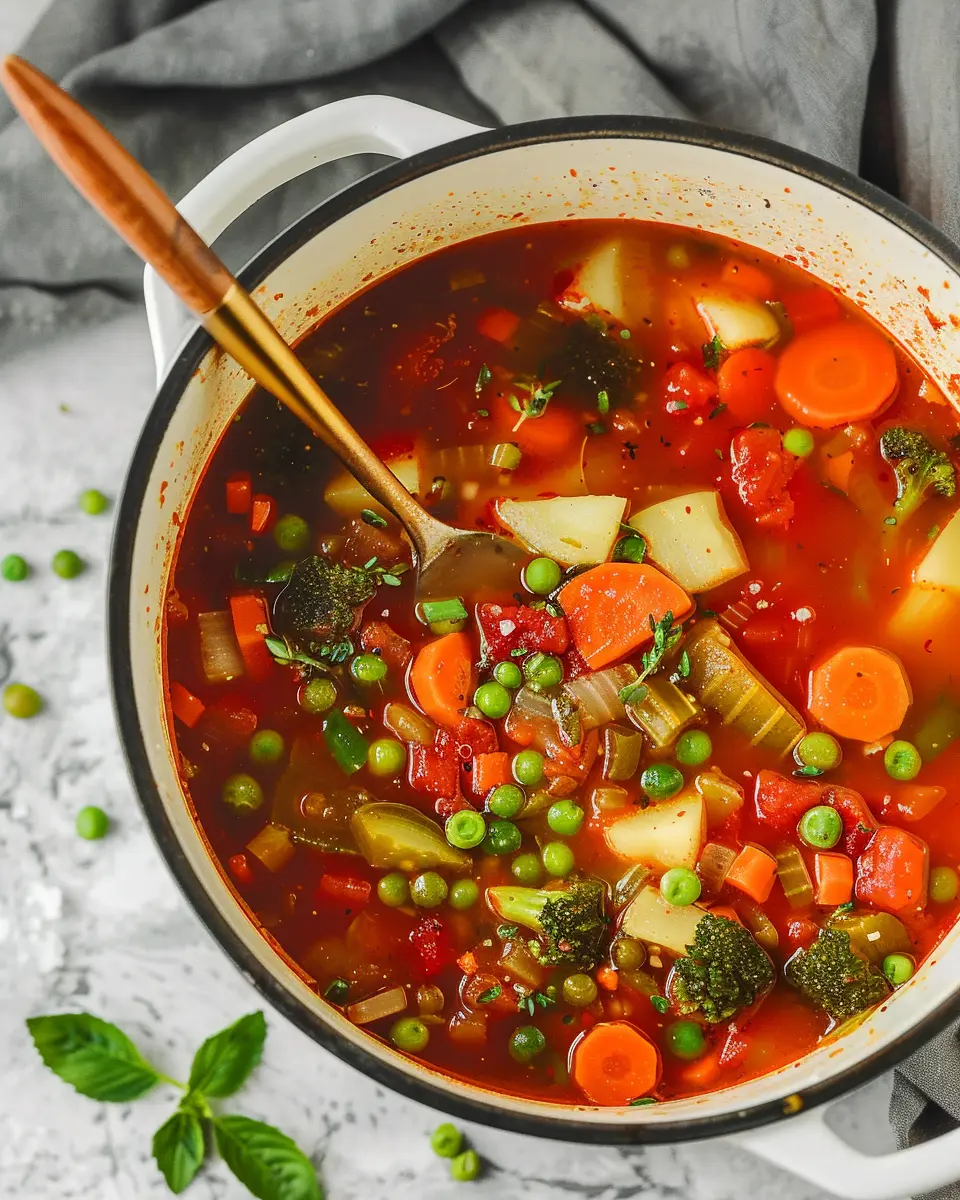
Ingredients for Vegetable Soup
Essential ingredients for a hearty bowl
Creating a delicious vegetable soup starts with the essential ingredients that lay the foundation for your flavorful masterpiece. Here’s what you’ll need:
- Vegetables: A mix of carrots, celery, bell peppers, and onions creates a vibrant base.
- Green goodness: Add leafy greens like spinach or kale for added nutrients.
- Broth: Vegetable broth enriches the flavor, but if you’re asking, “What about something meaty?” Chicken broth works well too!
- Herbs and spices: Fresh herbs like thyme, basil, and bay leaves enhance the aroma, while garlic adds an irresistible depth.
Optional additions to enhance flavor
Want to take your vegetable soup to the next level? Consider these optional additions:
- Protein: Turkey bacon or shredded chicken ham can add a savory twist.
- Legumes: Beans or lentils provide extra fiber and heartiness.
- Grains: A handful of quinoa or pasta can make your soup even more filling.
- Acid: A squeeze of lemon or dash of apple cider vinegar brightens the flavors.
For more inspiration, check out this article on the health benefits of vegetables.
Now that you have your ingredients sorted, let’s move on to crafting your perfect bowl!
Step-by-step Preparation for Vegetable Soup
Making a delicious vegetable soup is not only a great way to warm up during chilly nights, it also serves as a healthy and fulfilling meal option. Plus, it’s incredibly versatile, allowing you to use whatever vegetables you have on hand. Ready to dive in? Let’s take it step by step!
Gather Your Ingredients
First things first, let’s get those ingredients together. A well-prepared dish starts with the right components. Here’s what you’ll need:
- 2 tablespoons olive oil
- 1 onion, chopped
- 2 garlic cloves, minced
- 2 carrots, sliced
- 2 stalks celery, sliced
- 1 bell pepper, chopped
- 4 cups vegetable broth
- 1 can (14.5 oz) diced tomatoes (with juice)
- 2 medium potatoes, peeled and cubed
- 1 can (15 oz) beans (cannellini or kidney beans, rinsed and drained)
- 1 cup fresh or frozen corn
- 1 cup fresh or frozen peas
- Salt and pepper to taste
- Fresh herbs (like basil or thyme) for garnishing
Pro tip: For nutritional diversity, try adding leafy greens like spinach or kale, which can add an extra boost of vitamins to your vegetable soup.
Sauté the Base Vegetables
Now that everything is prepped, let’s get cooking! Heat the olive oil in a large pot over medium heat. Once hot, toss in the onions and garlic. Sauté for about 2-3 minutes until they become fragrant and the onions turn translucent.
Next, add the carrots, celery, and bell pepper to the mix. Let these veggies soften for about 5-7 minutes. This combination creates a flavor-packed base that’s hard to resist! Feel free to check out this article on the benefits of sautéing vegetables for more details on how it enhances flavors (Healthline).
Add Broth and Tomatoes
Once your base is looking colorful and smells heavenly, it’s time to bring in the liquids. Carefully pour in the broth and add the can of diced tomatoes along with their juices. This step adds depth and richness to your vegetable soup, turning it into a hearty delight.
Bring the mixture to a gentle boil. You can even take a moment to give it a little taste—this is your chance to adjust seasoning!
Incorporate Potatoes and Beans
Once boiling, add your diced potatoes and the rinsed beans to the pot. The starchy potatoes will make the soup heartier, while the beans add protein, making this dish an excellent choice for a filling vegetarian (or vegan) meal.
Reduce the heat to a simmer and let it cook for about 15-20 minutes, or until the potatoes are tender. Yes, it’s hard to resist stealing a spoonful during this time, but patience is key!
Simmer to Perfection
While the soup simmers away, the magic happens—flavors blend and intensify. Give it an occasional stir and check the tenderness of the potatoes. The goal is to have them soft enough to break apart when you press them with a spoon, but not so soft that they disintegrate completely.
This simmering time is also perfect for multitasking! You could chop up some fresh herbs or even prep a loaf of crusty bread to go along with your vegetable soup.
Finish with Corn and Peas
With the potatoes cooked to perfection, now it’s time to add the corn and peas. These bright and sweet additions elevate the texture and color of your vegetable soup. Stir them in and let the soup simmer for another 5-7 minutes.
Before serving, taste it once more for seasoning. A dash of salt or a sprinkle of fresh herbs can make a world of difference. Serve it hot, and enjoy the delightful creation you’ve made!
By following these steps, you’re not just preparing a nourishing meal; you’re also embracing a culinary experience filled with flavor and satisfaction. Happy cooking!
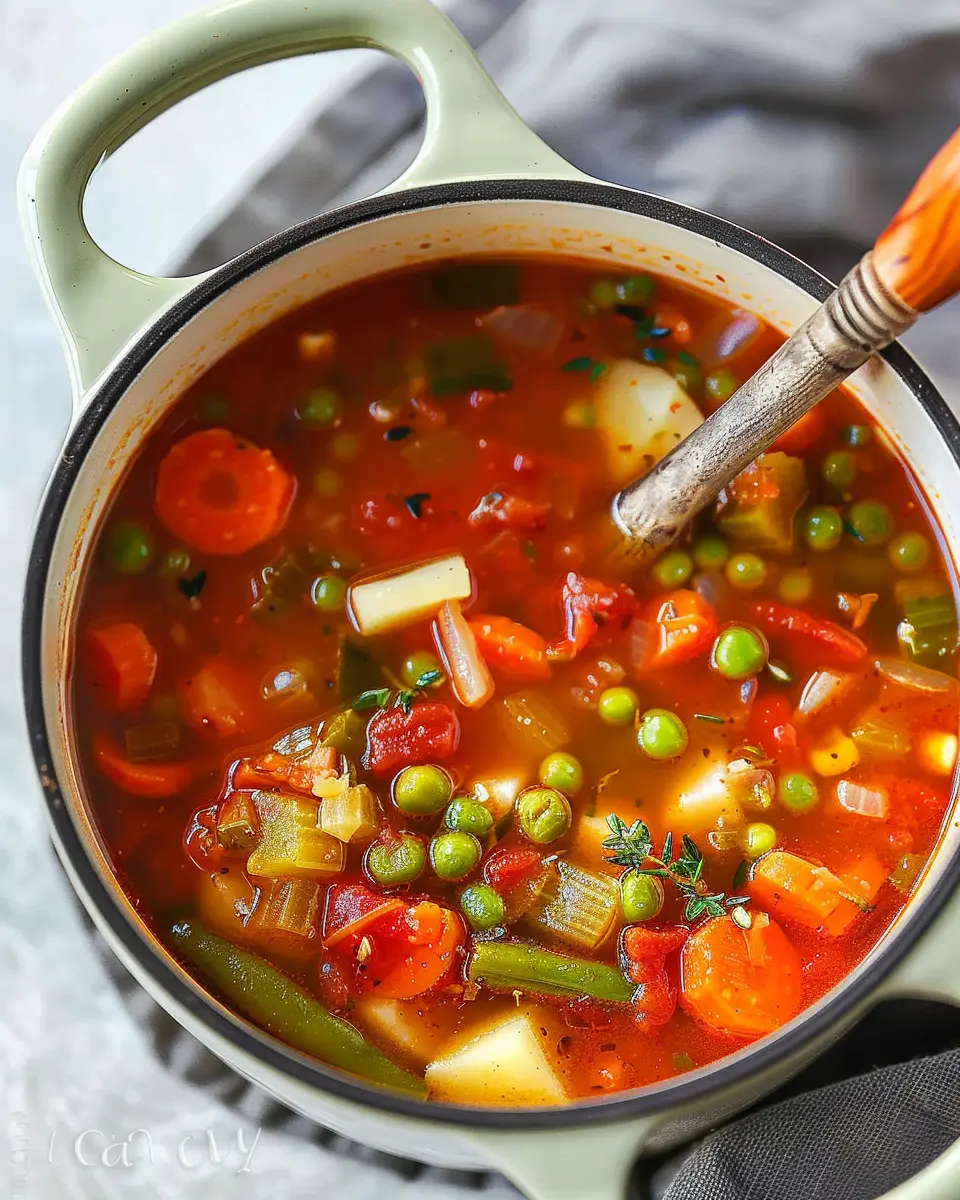
Variations of Vegetable Soup
When it comes to vegetable soup, the possibilities are endless! Whether you’re looking to warm yourself on a chilly evening or whip up something nutritious after a long day, these variations can suit any palate.
Creamy Vegetable Soup
For a rich, luscious twist, try a creamy vegetable soup. Start by sautéing onions, carrots, and celery in a bit of olive oil until tender. Then, add your choice of vegetables — broccoli, cauliflower, and spinach work beautifully! Pour in vegetable broth and simmer. Use an immersion blender or a regular blender to purée until smooth, then stir in heavy cream or coconut milk for that velvety texture.
Consider adding spices like thyme and a sprinkle of nutmeg for an extra punch. This variation is perfect for those cozy nights in.
Spicy Vegetable Soup
If you crave a kick, a spicy vegetable soup will warm you right up. Incorporate ingredients like jalapeños or red pepper flakes when sautéing your onions. For the vegetables, diced tomatoes, corn, and black beans add great flavor and texture.
Simmer your broth with a splash of lime juice to balance the heat. This vibrant option not only excites the taste buds but also packs a nutritional punch that fuels your day.
Asian-Inspired Vegetable Soup
For a delightful twist, why not explore an Asian-inspired vegetable soup? Begin with a base of vegetable or chicken broth enriched with soy sauce or miso for umami depth. Incorporate bok choy, mushrooms, and carrots, and finish with tofu for protein.
A hint of ginger and garlic can elevate the soup, while a drizzle of sesame oil just before serving will mesmerize your senses. This flavorful dish is perfect for lunch or a light dinner!
Exploring these variations of vegetable soup not only keeps your menu fresh but also allows you to embrace seasonal produce. Dive into this cooking adventure and enjoy the benefits of nourishing your body with wholesome ingredients! For inspiration, check out related articles on healthy meal prep or vegetable nutrition.
Cooking Tips and Notes for Vegetable Soup
Choosing the Right Vegetables
When crafting a delicious vegetable soup, focus on seasonal produce for maximum flavor and freshness. Think cruciferous veggies like broccoli or cauliflower, vibrant carrots, and hearty potatoes—each adds unique textures and tastes. Experimenting with leafy greens such as kale or spinach boosts nutritional value too!
Consider local markets like Farmers’ Markets for the freshest options. You’ll not only support local agriculture but also discover seasonal gems that enhance your dish.
Importance of Seasoning
Seasoning is where your vegetable soup truly finds its personality. Don’t shy away from herbs and spices! A pinch of thyme, rosemary, or even a dash of smoked paprika can elevate your soup to the next level. Try adding a splash of lemon juice or a tablespoon of miso for a lovely depth of flavor.
Make sure to taste as you go—seasoning at different stages can make a big difference in the end. After all, who wants bland soup that lacks character? With the right approach, your homemade vegetable soup can become a comforting staple in your kitchen!
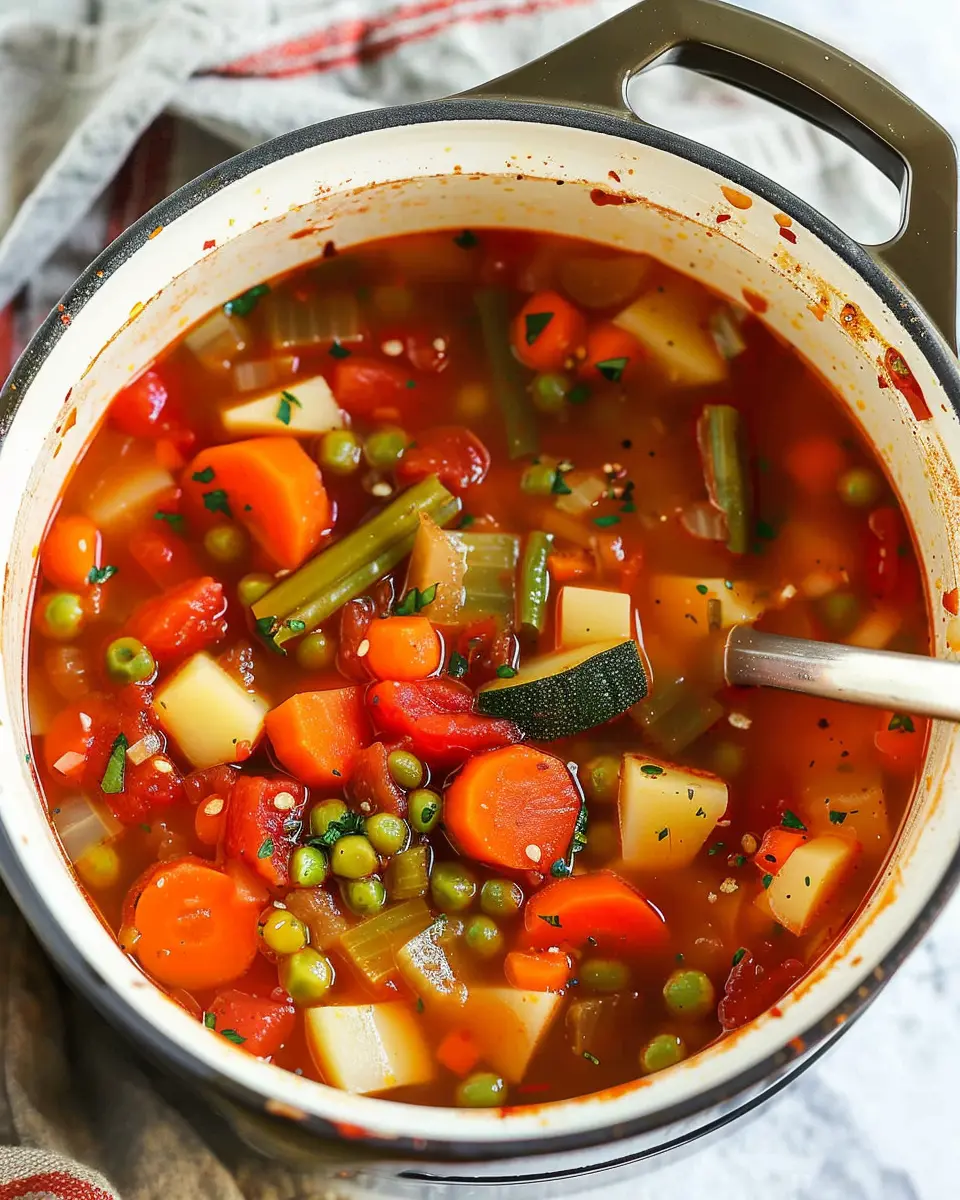
Serving Suggestions for Vegetable Soup
Complementary Sides and Bread
There’s something undeniably comforting about a warm bowl of vegetable soup. To elevate your meal, consider pairing your soup with a crusty loaf of sourdough or a slice of artisan bread. The hearty flavors of the bread complement the fresh vegetables perfectly. You can also place a simple side salad dressed in vinaigrette alongside your soup; this adds a refreshing crunch and balances the warm textures.
For a heartier option, why not try some garlic bread? It’s always a crowd-pleaser and makes for a delightful dipper. Looking for more inspiration? Check out this quick garlic bread recipe.
Ideal Presentation Tips
Presentation can make all the difference! Serve your vegetable soup in bright, colorful bowls to make the dish pop visually. Top it with a sprinkle of fresh herbs like parsley or basil to add that touch of elegance. A drizzle of olive oil just before serving not only enhances flavor but also adds a beautiful sheen. Lastly, don’t forget to place a small lemon wedge on the side; a squeeze can brighten the entire bowl!
These thoughtful touches will impress your guests and make your meal feel special.
Time Breakdown for Vegetable Soup
When you’re craving a comforting bowl of vegetable soup, knowing how to manage your time is key. Here’s a quick breakdown:
Preparation time
Getting everything ready should take about 15-20 minutes. Chop your veggies, gather your spices, and you’ll be ready to roll!
Cooking time
Once you toss the ingredients into the pot, it’s about 30 minutes of simmering goodness. That’s the perfect time to unwind after a long day, right?
Total time
In just under an hour, you can have a delicious and hearty vegetable soup ready to serve. That’s faster than a takeout order!
For more tips and tricks on preparing scrumptious healthy meals, check out Healthline’s quick cooking guidance. Cooking at home can be a delightful change!
Nutritional Facts about Vegetable Soup
Calories
A hearty bowl of vegetable soup typically contains around 100 to 150 calories, making it a fantastic low-calorie option. Depending on your specific ingredients, such as the choice of vegetables and any added proteins, the calorie count can slightly vary. This makes it an ideal choice for those looking to maintain or lose weight while still enjoying a fulfilling meal.
Fiber Content
One of the standout benefits of vegetable soup is its impressive fiber content. With ingredients like beans, lentils, and a variety of veggies, you can expect about 5 to 7 grams of fiber per serving. This not only supports digestion but also helps keep you feeling full and satisfied longer.
Vitamins and Minerals
Filled with an array of vibrant vegetables, a bowl of vegetable soup is packed with essential vitamins and minerals:
- Vitamin A: Important for vision and immune function, found in carrots and leafy greens.
- Vitamin C: Boosts immunity and skin health, abundant in tomatoes and bell peppers.
- Potassium: Aids in balancing fluids in your body, present in potatoes and tomatoes.
For more insights into the health benefits of vegetables, you might check out Healthline’s article on the vitamins found in vegetables.
So, the next time you’re stirring up a pot of vegetable soup, know that you’re not just enjoying a delicious dish, but also nourishing your body with vital nutrients!
FAQs about Vegetable Soup
Can I use frozen vegetables?
Absolutely! Using frozen vegetables in your vegetable soup is a fantastic shortcut—saving you time while still offering excellent flavor and nutrients. They’re frozen at their peak freshness, making them just as healthy as fresh ones. When using frozen veggies, just toss them in during the last few minutes of cooking. This way, they’ll warm up nicely without becoming mushy. If you’re curious about creative veggie combinations, check out this article that explores the benefits of frozen produce.
How long can I store leftover soup?
Storing your leftover vegetable soup is easy and convenient! Typically, you can keep it in the refrigerator for about 3-5 days. Ensure it’s in an airtight container to maintain its goodness. If you want to make it last longer, consider freezing it. Properly stored, vegetable soup can stay flavorful for up to 3 months in the freezer. Just remember to thaw it in the fridge before reheating. Simple, right?
What are some common mistakes to avoid?
Creating a perfect vegetable soup can be simple, but a few common pitfalls can trip you up:
- Overcooking the vegetables: This can lead to a mushy texture. Aim to keep them slightly crisp for the best bite.
- Not seasoning adequately: Don’t be shy! Seasoning your soup layers as you cook builds depth and flavor. Taste and adjust as you go!
- Rushing the simmer: Letting the soup simmer low and slow develops richer flavors. Patience pays off!
For more tips on avoiding kitchen mishaps, check this useful guide on cooking mistakes to enhance your culinary skills! Remember, every great cook has been where you are now. Happy cooking!
Conclusion on Vegetable Soup
Recap of its wholesome benefits
In wrapping up our journey into the world of vegetable soup, it’s clear this dish is a powerhouse of nutrition. Packed with vitamins, minerals, and antioxidants, it supports a healthy immune system and provides essential hydration. Making your vegetable soup at home allows you to control the ingredients, creating a guilt-free meal that’s both comforting and satisfying.
Plus, with endless variations, from classic recipes to creative adaptations, you’ll never tire of it! So, why not invite friends over and share a steaming bowl? It’s a delicious way to connect, nourish, and warm up during those chilly months. Need some inspiration? Check out Healthline for more on the benefits of vegetable-based diets!
PrintVegetable Soup Delights: Easy Recipes for Cozy Nights

Warm up with these delightful vegetable soup recipes, perfect for cozy nights.
- Prep Time: 15 minutes
- Cook Time: 30 minutes
- Total Time: 45 minutes
- Yield: 4 servings
- Category: Soup
- Method: Stovetop
- Cuisine: American
- Diet: Vegetarian
Ingredients
- 2 cups mixed vegetables
- 1 tablespoon olive oil
- 1 teaspoon salt
- 1/2 teaspoon black pepper
- 4 cups vegetable broth
- 1 cup diced tomatoes
- 1 teaspoon dried herbs
Instructions
- Heat olive oil in a large pot over medium heat.
- Add mixed vegetables and sauté until tender.
- Stir in salt, pepper, and dried herbs.
- Add vegetable broth and diced tomatoes, bringing to a boil.
- Reduce heat and let simmer for 20 minutes.
- Serve hot and enjoy!
Notes
- Enhance flavor with fresh herbs.
- Adjust seasoning to taste.
Nutrition
- Serving Size: 1 bowl
- Calories: 150
- Sugar: 5g
- Sodium: 800mg
- Fat: 7g
- Saturated Fat: 1g
- Unsaturated Fat: 5g
- Trans Fat: 0g
- Carbohydrates: 22g
- Fiber: 6g
- Protein: 5g
- Cholesterol: 0mg